
Project Partner: ProjectGRIPH.org 501(c)(3) EIN 93-1678937
Project Partner: AnthroZooCo.org 501(c)(3) EIN 41-2826927
Co-Thriving
Co-thriving is about more than coexistence. It is the lived practice of creating conditions where humans and other species can flourish together, acknowledging non-human animals as active agents in their own recovery. Rather than centering on human control, co-thriving emphasizes reciprocity, shared resilience, and the creation of futures where diverse beings thrive in harmony.
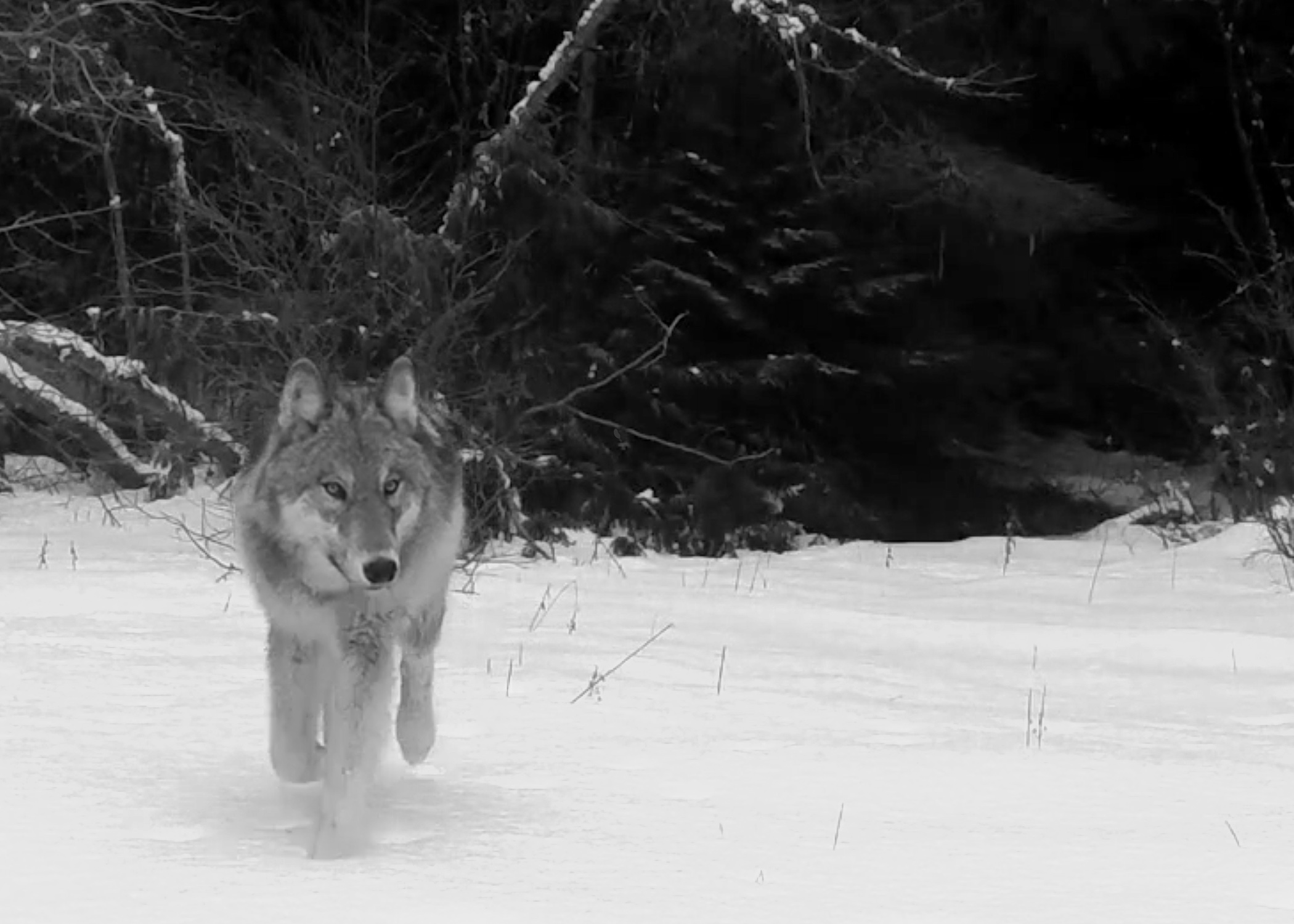
The Co-Thriving Vision
Co-thriving is being developed through collaboration between Daniel Curry and Claire Musser, combining field practice and research to redefine human–wildlife relationships across the Western United States and beyond.
Daniel Curry is a conflict mitigation specialist and founder of Project GRIPH (Guarding the Respective Interests of Predators & Humans), where he has long championed non-lethal coexistence with predators through daily, lived practice. Focusing on range riding as his primary tool. His work challenges the boundaries of conservation by centering empathy, communication, and the shared well-being of wolves, livestock, and people. This vision moves beyond coexistence into a future where co-thriving is the norm.
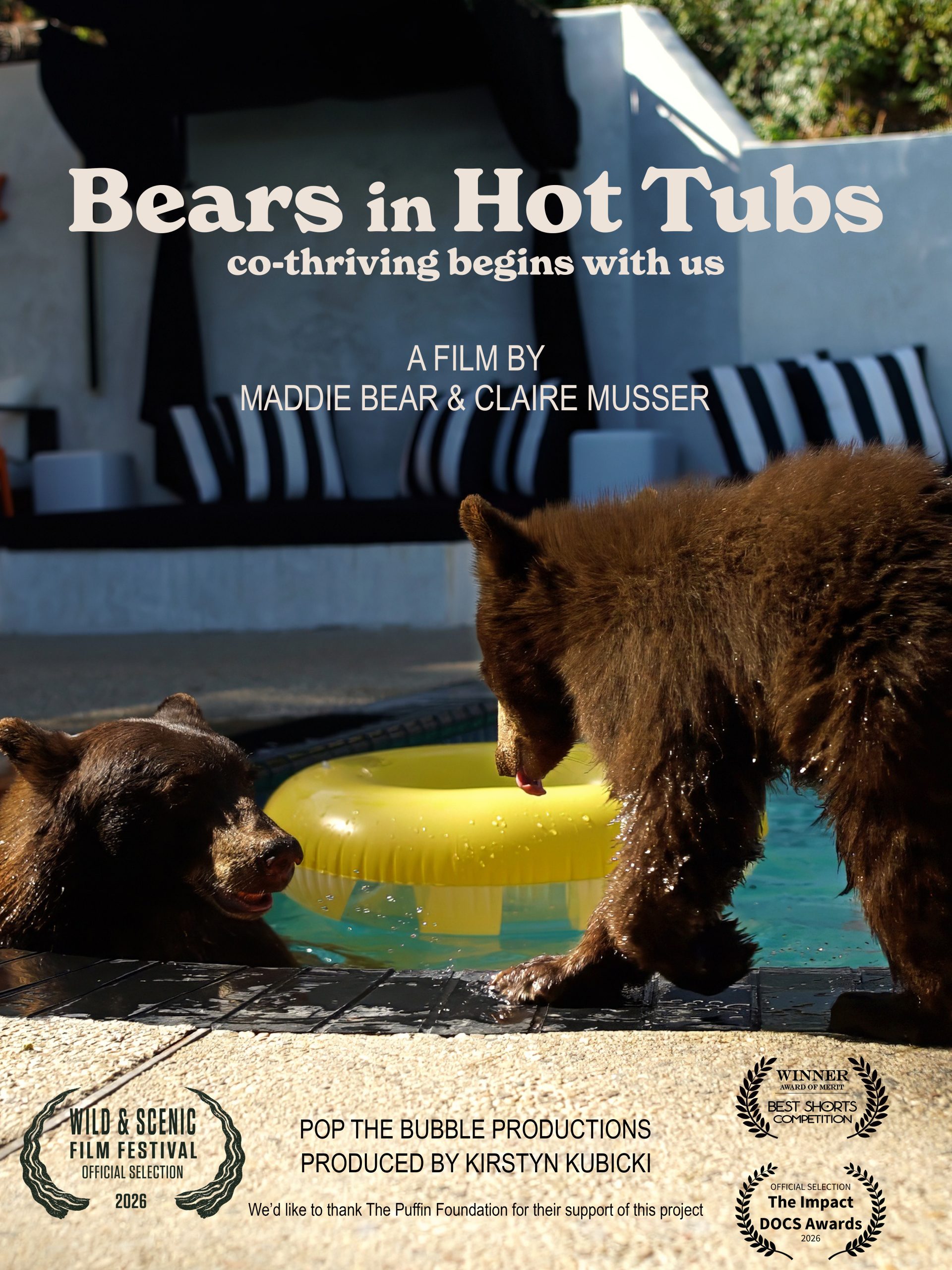
Claire Musser is the Executive Director of the Grand Canyon Wolf Recovery Project and a postgraduate researcher in Anthrozoology and Environmental Film. Her research explores multispecies entanglements and co-developing the emerging theory of co-thriving with Curry through both academic and field-based collaboration. She also directed Bears in Hot Tubs, which is an intimate short film co-created with Maddie Bear and her kin.
SPECIAL EVENT: FEB 7, 2026, MONROVIA, CA
FILM SCREENING OF BEARS IN HOT TUBS AND RANGE RIDER
Coexistence Isn’t Enough: An Invitation to Co-Thrive Across Shared Landscapes
What if conflict with wildlife wasn’t inevitable but chosen?
Across North America, wolves are blamed for conflicts they did not create. Bears are labeled nuisances for surviving in neighborhoods built over their habitat. Rural and urban communities are positioned on opposite sides of a debate that too often reduces complex relationships to fear, control, and lethal outcomes. Under the banner of “coexistence,” animals are expected to adapt while humans retain authority over land, borders, and life itself.
But coexistence isn’t enough anymore.
The idea of co-thriving did not begin in theory. It began on the ground.
For more than 13 years, range rider Daniel Curry has worked daily alongside ranchers, cattle, and wolves in rural working landscapes. Through constant presence, attentiveness, and care, Curry developed non-lethal practices that prevent conflict before it begins. His work revealed a critical truth: conflict is not inevitable. It is shaped by human choices, how livestock and wildlife are managed, how land is stewarded, and how fear is addressed or inflamed. For wildlife conflict is the result of human systems that leave them no safe options.
Years into this work, Curry met Claire Musser, who is pursuing a PhD focused on human–wildlife coexistence. Through sustained dialogue, shared field experience, and deep listening to Curry’s practice, Musser began to see the limits of coexistence as a framework. While coexistence often centers tolerance and containment, the realities unfolding on the land pointed toward something more demanding and more hopeful.
Musser translated these field-based insights into a theory and praxis, giving conceptual grounding to what was already working in practice. What emerged was co-thriving: an ethic and approach rooted in relational care, mutual responsibility, and shared survival. Co-thriving asks not how wildlife must adapt to human systems, but how humans must change to live well within shared landscapes.
These ideas took visual and narrative form through the short documentary Bears in Hot Tubs, which extends the co-thriving framework into urban space. The film reimagines how black bears navigate human-dominated neighborhoods, using animal-led visual storytelling to explore how attentiveness, restraint, and responsibility can guide human behavior across species boundaries.
Together, the work with wolves on rural working lands and bears in urban neighborhoods demonstrates that co-thriving is not place-specific. It is a grounded, transferable approach, one that works across landscapes, from ranchlands to cities, wherever human and nonhuman lives are entangled. It also offers a way to navigate the rural–urban divide by focusing on shared responsibility rather than opposing interests.
On February 7, a group of invited guests will gather for a private screening and conversation exploring how co-thriving works across landscapes, from wolves to bears, from rural working lands to urban neighborhoods. This gathering is not simply about watching a film. It is an invitation to learn, to question, and to help shape a growing movement that reimagines how conservation, culture, and care can work together.
Those attending will be invited into an open conversation about what comes next: how co-thriving can inform future projects, policy conversations, creative work, and on-the-ground solutions that reduce conflict without sacrificing wildlife or communities. The gathering will also explore how early, grassroots support can help extend this work beyond urban settings, demonstrating that co-thriving is not only possible with bears in cities, but also with wolves in rural, high-conflict landscapes where the stakes are highest.
Coexistence isn’t enough.
Conflict is a choice.
The future depends on how we choose to co-thrive.
Space for the February 7 private screening is limited. Those interested in learning how they can help shape and support the co-thriving movement are encouraged to connect now.
Claire Musser and Daniel Curry will be available for in-person follow-up meetings on February 8 for those interested in shaping what comes next.
Coming Soon
Beyond Coexistence: Co-Thriving with Wolves in the Anthropocene is a forthcoming co-authored book chapter by Claire Musser and Daniel Curry, published by Exeter University Press. Grounded in multispecies ethnography and long-term, field-based conflict prevention work in northeast Washington State, the chapter centers on the Onion Creek wolf pack and the ranching landscapes they navigate.
Drawing on lived experience alongside ethical and environmental humanities scholarship, the work examines how non-lethal, relationship-based practices such as professional range riding, can reshape entrenched predator–livestock conflict and offer durable alternatives to reactive wildlife management. The chapter contributes empirical and conceptual foundations to the growing co-thriving framework, situating it within contemporary debates on conservation, care, and shared futures in the Anthropocene.
Musser, C., & Curry, D. (forthcoming). Beyond coexistence: Co-thriving with wolves in the Anthropocene – The Onion Creek Pack and the legacy of wolf persecution. In C. Biswas et al. (Eds.), Animals Past in the Anthropocene: Exploring Human–Animal Relationships through Environmental Humanities. Exeter, UK: Exeter University Press.